Description
Water vole greetings card
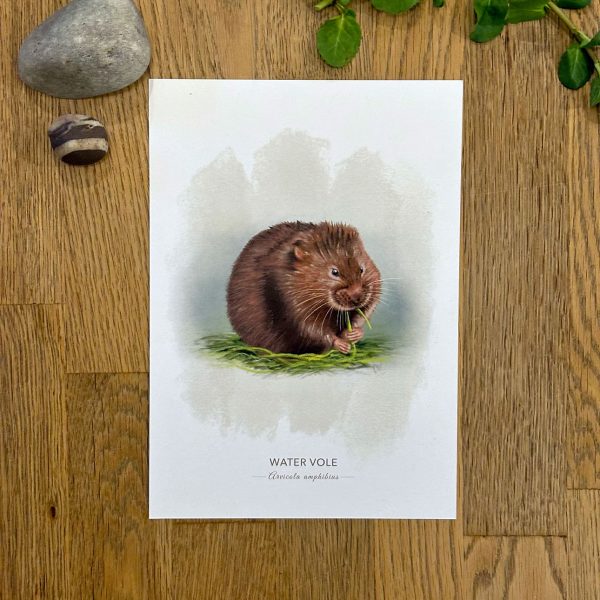
This A6 Water vole greetings card is blank inside so you can add your own personal message.
The back of this A6 greetings card includes the following:
Native to the UK, the water vole is the largest species of vole in Britain. It has a blunt muzzle and short, rounded ears that are almost hidden by its glossy brown fur. This well-loved semi-aquatic mammal feeds on a mixture of lush sedges, rushes, and grasses along the banks of slow-flowing rivers, ditches, lakes, ponds and canals.
Other semi-aquatic mammals greetings cards include: Beaver greetings card, Grey seal greetings card and Otter greetings card
This greetings card is also available as part of a set
About the Water Vole
Water voles have glossy brown or black fur and a blunt muzzle with small, black eyes. Their ears are rounded and almost hidden, and they have a dark, slightly furry tail. They are mostly active during the day, sitting on their hind feet and feeding on grass stalks held in their front paws. If they are disturbed, they dive into the water with a characteristic ‘plop’ sound. When they swim, their head and back are visible.
Water voles have undergone one of the most serious declines of any wild mammal in Britain during the 20th century. The intensification of agriculture in the 1940s and 1950s caused the loss and degradation of habitat, but the most rapid period of decline was during the 1980s and 1990s as American mink spread. Between 1989 and 1998, the population fell by almost 90 per cent!
Read more about the water vole and the People’s Trust for Endangered Species
Did you know?
Water voles are the largest species of vole in Britain and are sometimes mistaken for brown rats, which can be found in a similar habitat. They are also sometimes commonly known as the water rat or water dog. The beloved ‘Ratty’ in Kenneth Grahame’s classic children’s tale, The Wind in the Willows was actually a water vole. Despite being sometimes referred to as a ‘water rat’, there is no such thing – there are brown rats, black rats and water voles.