




Description
Butterflies & moths card set
This Butterflies & Moths card set contains 4 cards and kraft envelopes. Each A6 card is blank inside for your own personal message. The reverse of each card includes a short description of each butterfly or moth:
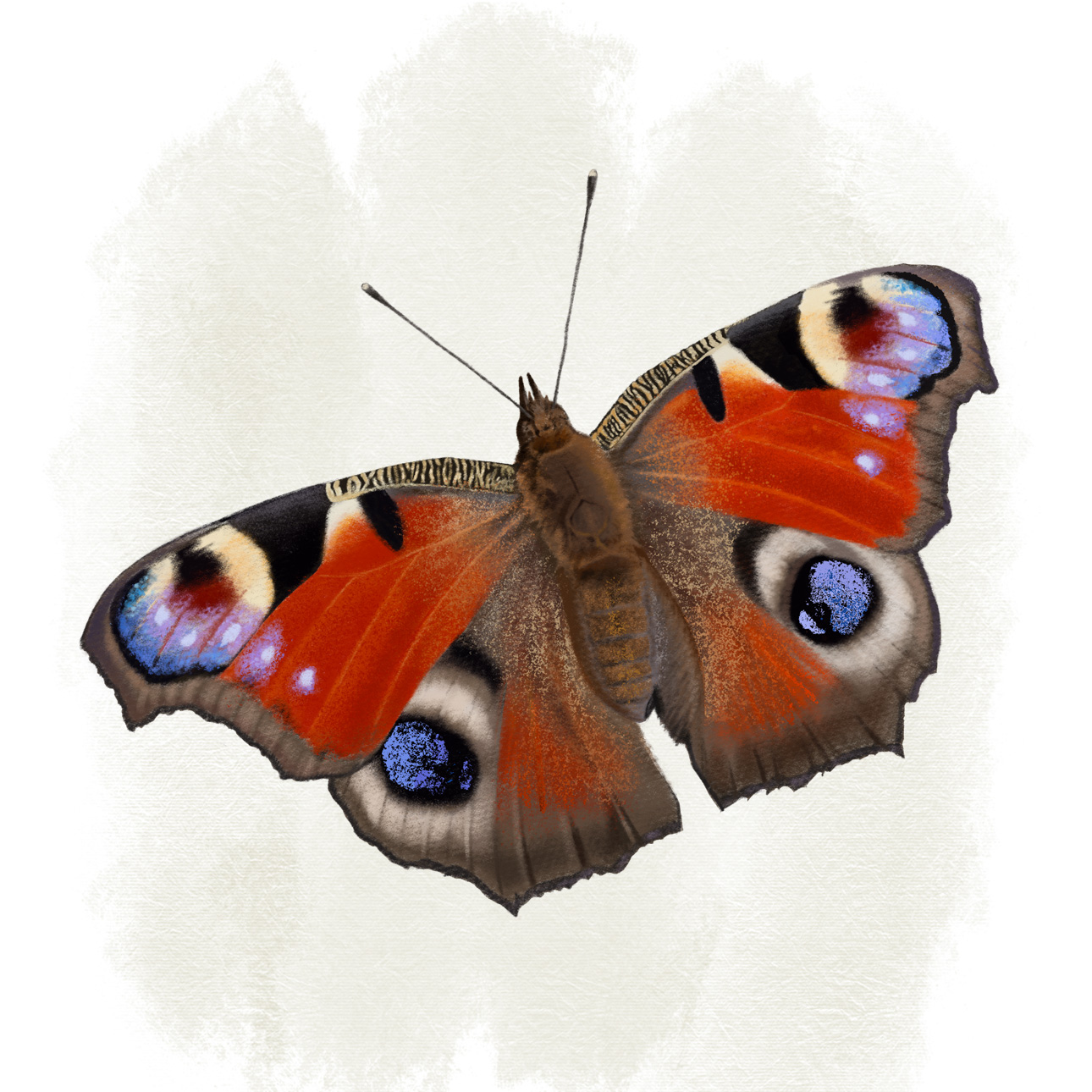
Peacock butterfly
One of the UK’s most-loved butterflies, the peacock is recognisable by its brightly coloured wings with captivating eyespots that serve as a defence mechanism to deter predators. It is often seen in woodlands, gardens & meadows where it feeds on buddleja and other flowers.
Its caterpillars feed on the leaves of stinging nettles.
Holly Blue butterfly
The holly blue butterfly is a small, striking species that emerges well before other blue butterflies. Its wings are pale blue with darker edges and it often flutters around holly and ivy plants, which are its primary larval food sources. These butterflies are known for their graceful flight and are an important indicator of environmental health.
Elephant hawk moth
The elephant hawk-moth has beautiful pink and olive-green markings and gets its name from its caterpillar, which resembles an elephant’s trunk. The caterpillar feeds on plants like willowherbs and fuchsia, while the adult moth uses its long proboscis to sip nectar. This moth plays a crucial role in pollination.
Jersey tiger moth
The jersey tiger is a beautiful moth with unmistakable bold black and orange wing patterns. Found primarily in the south of England and active both day and night, the adults are attracted to flowers like buddleja. The caterpillars prefer to eat plants such as common nettle, hemp-agrimony, borage, ground ivy and bramble.
These Butterfly and Moth cards are also available as individual cards.
Did you know?
The Elephant hawk moth caterpillar is chunky (like it’s name sake!) featuring two big ‘eye spots’ behind the head which are designed to deter predators. When the caterpillar feels threatened it retracts its head and the eye spots become even larger! The caterpillars particularly like eating fushias, so consider planting some in your garden in order to attract them!
How to identify a moth from a butterfly
There are always some exceptions to the following rules but a good way of identifying whether it is a moth or a butterfly lies in the antennae and wing position! Generally butterflies have thin featherless antennae with a club shape on the end. Moths antennae lack the club on the end and are normally thicker and feathery. Butterflies also tend to hold their wings closed when still, whereas Moths tend to hold their wings open. Find out more fascinating facts from The Woodand Trust.


Reviews
There are no reviews yet.